

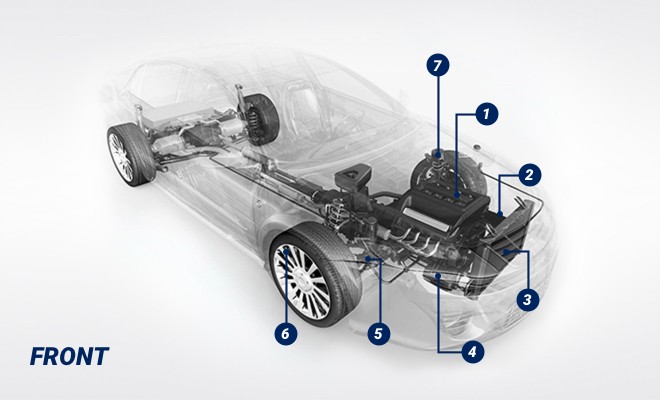
Owning and operating a car involves more than just filling up the tank and turning the key. Beneath the surface, cars are complex machines made up of numerous interdependent parts, each with its own critical role in ensuring safe and efficient driving. Whether you're a new driver, a seasoned car owner, or simply curious about the inner workings of your vehicle, understanding the main 汽車配件 can help you maintain and take care of your vehicle better. This article will explore the essential components of a car and explain their functions.
1. The Engine: The Core of Your Car’s Power
The engine is the heart of your vehicle, responsible for converting fuel into power that moves the car. It’s an intricate system made up of many parts that work together to ensure efficient combustion and power generation.
- Cylinders: These chambers house the air-fuel mixture, where combustion occurs. The number of cylinders often correlates with engine power; more cylinders usually mean more power.
- Pistons: Moving up and down within the cylinders, pistons convert the energy from combustion into mechanical energy.
- Crankshaft: As pistons move, the crankshaft converts their up-and-down motion into rotational force that drives the wheels.
- Timing Belt/Chain: These ensure that the engine's valves and pistons are synchronized, allowing the engine to run smoothly.
2. Transmission: The Gearbox That Manages Power Distribution
The transmission is responsible for transferring power from the engine to the wheels, and it plays a crucial role in controlling the speed and torque of the vehicle.
- Manual Transmission: This system requires the driver to manually shift gears, giving more control over the vehicle's performance.
- Automatic Transmission: The system shifts gears automatically, making it easier to drive without the need for manual input.
- CVT (Continuously Variable Transmission): Unlike conventional transmissions, CVTs offer a smooth ride by providing an infinite range of gear ratios for more efficient acceleration.
3. Battery: Providing Electrical Power
The battery is essential for starting your car and powering its electrical systems. It supplies energy to everything from the lights and radio to the air conditioning and ignition system when the engine isn’t running.
- Lead-Acid Batteries: The most common type in traditional gasoline vehicles, providing a high burst of energy needed to start the engine.
- Lithium-Ion Batteries: Common in electric vehicles (EVs), these batteries are more energy-dense, efficient, and long-lasting compared to lead-acid batteries.
4. Suspension System: Enhancing Comfort and Control
The suspension system keeps your car comfortable to drive by absorbing shocks from uneven surfaces and helping maintain stability when turning or driving at high speeds.
- Shock Absorbers: These components absorb the impact from bumps and potholes, reducing vibrations and ensuring a smoother ride.
- Springs: Springs support the vehicle’s weight and absorb shocks, helping to maintain the car's ride height and stability.
- Struts: These combine shock absorbers and springs into a single unit, providing more robust suspension performance.
5. Brakes: Ensuring Safety
Brakes are one of the most important safety features in any car, enabling you to stop the vehicle quickly and safely. The braking system is designed to convert kinetic energy into heat, slowing down the wheels.
- Disc Brakes: Most modern vehicles use disc brakes, where brake pads press against a rotating disc to create friction and slow the car down.
- Drum Brakes: These older systems use a set of brake shoes inside a rotating drum to create friction.
- ABS (Anti-lock Braking System): ABS prevents the wheels from locking up during emergency braking, maintaining steering control and preventing skidding.
6. Cooling System: Preventing Overheating
Engines generate a lot of heat, and without a cooling system, the engine could overheat and suffer serious damage. The cooling system ensures that the engine operates at the optimal temperature.
- Radiator: The radiator cools the engine coolant, releasing heat from the coolant and preventing the engine from overheating.
- Coolant: This fluid circulates through the engine, absorbing excess heat, and is then cooled down in the radiator.
- Water Pump: The water pump circulates coolant through the engine and radiator to maintain a stable temperature.
7. Exhaust System: Emission Control and Noise Reduction
The exhaust system channels harmful gases produced by combustion away from the engine and into the atmosphere. It also reduces engine noise and helps control the vehicle’s environmental impact.
- Exhaust Manifold: Collects exhaust gases from the engine’s cylinders and directs them into the exhaust system.
- Catalytic Converter: Converts harmful gases like carbon monoxide, nitrogen oxides, and hydrocarbons into less harmful substances such as carbon dioxide.
- Muffler: Reduces the noise generated by the engine’s exhaust gases, making the car quieter.
8. Fuel System: Delivering Power to the Engine
The fuel system manages the storage, filtration, and delivery of fuel to the engine. A properly functioning fuel system is crucial for optimal engine performance and fuel efficiency.
- Fuel Tank: Stores gasoline, diesel, or other fuels until they’re needed for combustion.
- Fuel Pump: Sends fuel from the tank to the engine at the right pressure.
- Fuel Injectors: These spray a fine mist of fuel directly into the engine’s cylinders to ensure efficient combustion.
9. Lighting System: Safety and Visibility
Lights are crucial for both seeing the road and being seen by others. Proper functioning lights ensure that you can drive safely in the dark or low-visibility conditions.
- Headlights: Illuminate the road ahead, allowing drivers to see at night or in bad weather conditions.
- Turn Signals: Indicate to other drivers when you intend to change lanes or turn.
- Brake Lights: Let other drivers know when you’re slowing down or stopping.
10. Tires and Wheels: Essential for Traction
Tires are the only contact between your vehicle and the road, which means they play a vital role in ensuring your car’s traction, handling, and safety.
- Tire Tread: The pattern of grooves on a tire’s surface, providing traction and helping to channel away water during wet conditions to avoid hydroplaning.
- Wheel Rims: The metal component that holds the tire in place and attaches to the suspension system, allowing the wheels to rotate.
11. Steering System: Control and Precision
The steering system controls the direction of the car. It converts the driver’s input from the steering wheel into movement of the wheels.
- Steering Wheel: The primary interface for the driver to control the direction of the vehicle.
- Rack and Pinion: A mechanism that turns the steering wheel’s rotational motion into linear motion that moves the wheels.
- Power Steering: A hydraulic or electric system that reduces the effort needed to turn the wheel, especially at low speeds.
12. Air Conditioning and Heating: Comfort on the Road
The climate control system keeps the cabin at a comfortable temperature, ensuring a pleasant ride regardless of the weather conditions outside.
- Compressor: The compressor compresses refrigerant, which is then circulated through the system to cool the air.
- Heater Core: Uses the engine’s heat to warm the air inside the car, keeping passengers comfortable in winter months.
- Blower Motor: This motor pushes the air through the heating or cooling system and into the cabin.
13. Windshield Wipers: Visibility in All Conditions
Windshield wipers are an essential safety feature, ensuring that the windshield stays clear during rain, snow, or even just dirt buildup.
- Wiper Blades: These rubber blades move across the windshield to clear away water, dirt, and debris.
- Windshield Washer Fluid: Used in combination with the wipers, the fluid helps to clean the windshield, especially when dirt or bugs obscure visibility.
Conclusion: Keeping Your Car Running Smoothly
Cars are made up of a vast network of parts, all working together to deliver a safe, efficient, and comfortable driving experience. Understanding the role of these key components can help you take better care of your vehicle and ensure its longevity. Regular maintenance and timely repairs are crucial for ensuring all these systems function optimally, keeping you and your passengers safe on the road. Whether you're troubleshooting a problem or just trying to be a more informed car owner, knowing the main parts of your vehicle is a great starting point.