

The field of photonics has observed amazing improvements, specifically in the development of various modulators that play important functions in countless optical applications. Amongst these, fiber acousto-optic modulators (AOMs) and their lots of variations, such as space AOMs and free-space AOMs, stand out due to their convenience and efficiency.
These lasers create light with an extremely narrow spectral size, making them suitable for different detailed applications, including meaningful communication systems and high-resolution spectroscopy. This integration shows the trend towards increased compactness and effectiveness in optical systems without giving up efficiency.
The energy of fiber optic delay lines can not be overemphasized, particularly in making advanced optical systems that need accurate timing and synchronization. These delay lines harness the integral properties of optical fibers to handle light signals effectively, permitting researchers and designers to check out high-speed information transmission or intricate timing explores very little loss of integrity. The electric optical fiber delay line acts as a main component in this context, promoting the manipulation of light signals to match certain needs.
Check out Ultra Narrow Linewidth the newest improvements in photonics, concentrating on the essential duty of fiber acousto-optic modulators in enhancing laser applications, telecoms, and accuracy optical systems for diverse sectors.
Modulators are vital in laser systems, playing a vital duty in changing constant wave outputs right into pulse layouts. Acousto-optic Q-switch modulators offer this specific function, making it possible for rapid modulation of laser outcomes, which leads to high-peak power pulses. This ability is essential in applications such as material processing, where precision and rate are essential. The selection in between an AOM and an electro-optic modulator (EOM) regularly occurs in conversations bordering modulation methods. While both serve the key function of pulse modulation, an AOM generally displays higher optical power dealing with capacities and faster changing times contrasted to EOMs, making AOMs specifically useful in high-energy laser applications.
The difference between acousto-optic switches and modulators is a critical element of comprehending exactly how these devices work in different situations. In contrast, a modulator readjusts the light’s homes, straight impacting the beam of light’s features.
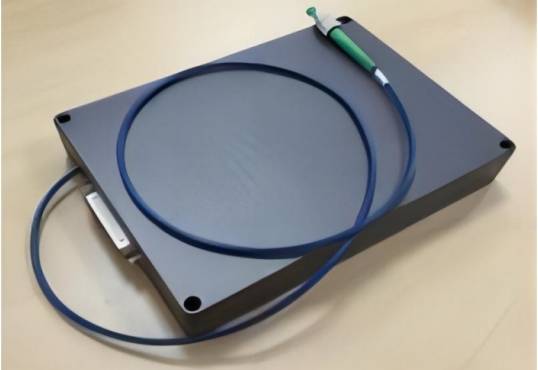
Acousto-optic devices have significantly acquired grip in the market, driven by the intensifying need for advanced optical technologies. The acousto-optic modulator market is witnessing considerable development due to applications in telecoms, army systems, and commercial manufacturing.
The qualities of narrow linewidth laser sources are essential to certain applications, where comprehensibility and accuracy are critical. Narrow linewidth fiber lasers exhibit stable discharge with marginal spooky spread, catering to applications in fiber-optic interactions and noticing innovations. These high qualities are essential when managing long-distance information transmission, where signal deterioration can dramatically affect the top quality of information obtained. Coupling these fibers with advanced modulators makes it possible for researchers to check out brand-new frontiers in optical communication systems.
Acoustic optical deflectors add to the flexibility of optical systems, offering a means to manipulate light dynamically and successfully by making use of acoustic waves as the managing mechanism. Such devices can be found in various applications, from laser scanning systems to innovative imaging strategies. By making use of the concepts of acousto-optics, these deflectors assist in achieving exact and fast changes in the light beam’s trajectory without the demand for complex mechanical components.
In exploring the kinds of pulse modulation, one recognizes the details and selection fundamental in the area. Pulse modulation strategies, such as pulse-width modulation (PWM) and pulse-position modulation (PPM), permit control of light based upon discharge to develop varying signal types. These techniques promote developments in electronics and photonics, from regulating laser outcomes to enhancing the performance of fiber optic systems.
Additional factor to consider of optical passive components exposes their crucial role in boosting system integrity. These components, that include isolators, couplers, and filters, help with the company and management of light within intricate optical setups without the requirement for active participation. Their payment to general system performance is important, mainly when incorporated with modulators and other vibrant optical devices. Significantly, the smooth assimilation of active and passive components defines the capacity of contemporary photonic systems.
The growing emphasis on space applications stresses the need for reputable and durable optical systems that can operate properly in severe conditions. Space acousto-optic modulators, specifically, fit the distinct needs of space objectives, where factors such as radiation exposure and temperature level fluctuations can dramatically influence functionality. The development of space-grade acousto-optic devices makes certain that communication and data collection stay undisturbed in the severe atmospheres of space.
Acousto-optic Q-switching represents among one of the most reliable techniques of creating high-energy pulses, important for applications ranging from laser noting to medical treatments. The modulation abilities integral in AOMs enable them to adapt to differing needs, optimizing pulse duration and power outcome. As a result, they supply a cutting-edge path to boost laser applications across diverse areas.
As we dive even more into the future of photonics, it becomes significantly clear that development in laser modulators and acousto-optic technologies is critical. The developments in modulator drivers enhance the effectiveness with which EOMs and aoms run, allowing faster and more reliable performance. The crossover between advancements in modulation and the boosting need for greater bandwidth and lower latency in interaction systems suggests a future abundant with chances for reinforced optical communications.
Comprehending the fundamental mechanics that underpin acoustic optical modulators will certainly result in superior design and performance improvements as research study continues to grow. The expedition of brand-new products, assimilations, and strategies in locations like micro-nano fabrication will likely yield devices with also finer control and expanded functional lifetimes. These advancements not only guarantee boosted functionality for existing systems however invite completely new applications within arising innovations in quantum computer, robotics, and advanced production.
In recap, the domain of acousto-optic modulators and relevant fiber-optic technologies personifies rapid progress and intricacy, functioning as fundamental components within several contemporary optical applications. With the expanding demand for precision and high performance in numerous sectors, the advancement of acousto-optic devices, such as fiber AOMs, proceeds to evolve, adapting to brand-new obstacles and opportunities. As designers and scientists push the boundaries of innovation, these devices will certainly continue to be central to shaping the future of optical interaction, laser applications, and beyond, proclaiming a new age of technological advancement.